Should You Change What You Grow After Wisconsin’s Hardiness Shift?
A change on Wisconsin’s hardiness map can make gardeners wonder whether familiar plants are suddenly risky—or whether it is time to try something new. The map is useful, but it is not a promise about how any particular yard will fare. Use it to inform plant choices, then weigh winter exposure, local conditions, and the plants already thriving in your garden.
What a hardiness shift does and does not tell you
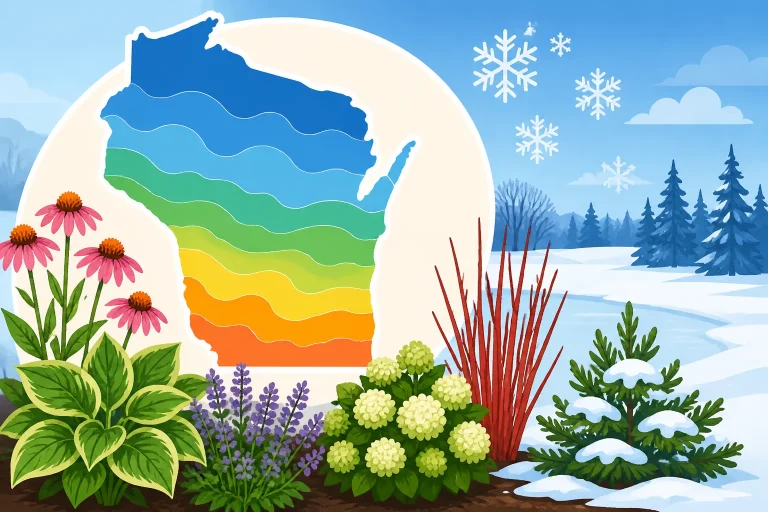
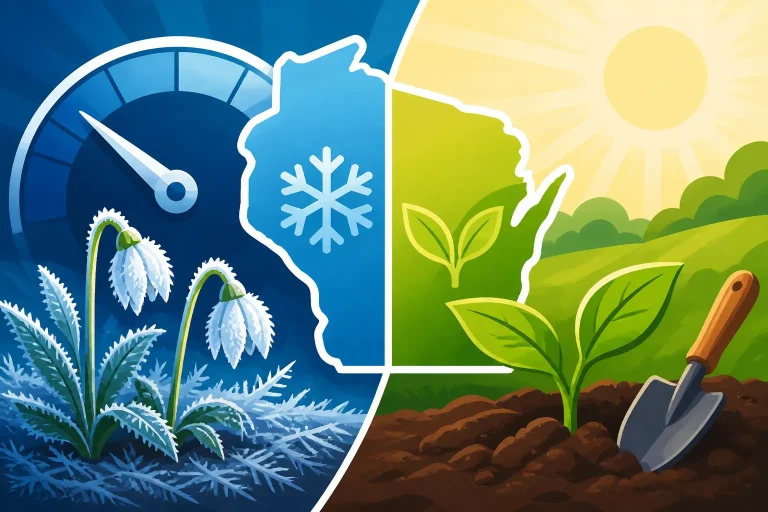
The USDA Plant Hardiness Zone Map is a tool for comparing a location’s typical coldest winter conditions with the cold tolerance of perennial plants. A shift on the map can change the range of plants that looks worth considering, but it does not mean that every garden in an area has the same conditions or that established choices need replacing.
The University of Wisconsin-Madison Division of Extension recommends using the USDA 2023 hardiness zone map as a planting guideline, not as a guarantee that a plant will survive in a particular yard. A map zone can help you narrow options, but it cannot account for every feature of a planting site. Wind exposure, snow cover, drainage, nearby structures, and cold-air movement can all affect what a plant experiences.
Hardiness zones are also not planting calendars. They help describe the cold conditions a perennial plant may tolerate; they do not tell you when to sow vegetable seeds, move seedlings outdoors, or expect a safe frost window. For timing decisions, pair zone information with local conditions and the crop’s needs. Wisconsin Planting Zones Explained: Checking Your USDA Hardiness covers how to check a location’s zone, while Understanding Wisconsin Last Frost Dates: Probability vs Safe Timing explains why frost dates are a separate planning tool.
A warmer-looking map result may prompt you to consider less cold-hardy plants. That can be a reasonable experiment in a sheltered spot, but it is not a reason to redesign a whole garden. A mapped zone summarizes regional winter conditions. Your own garden can be more exposed or more protected than the broader area represented by the map.
It is also useful to think about what a shift means for your goals. If a long-lived shrub or tree is healthy and performing well, the map alone does not provide a reason to remove it. If you are choosing a new plant, the map can help you compare its stated hardiness with your area’s usual winter conditions. If you are deciding what to grow in a vegetable bed, the map is usually less useful than the crop’s growing-season needs, local frost risk, and soil and weather conditions.
In short, treat a map change as a reason to review choices, not a demand to change them. It can open the door to trying a plant in a carefully chosen location, while leaving room for conservative choices where failure would be costly or difficult to reverse.
How to decide whether a plant choice should change
Start with the plant and the reason you are considering a change. A perennial that has survived several winters in your yard has already shown how it responds to that site’s conditions. A new plant, on the other hand, has no such track record in your garden, so its hardiness rating and the character of the planting spot matter more.
The University of Wisconsin-Madison Division of Extension advises gardeners to use caution when growing or using plants rated as a half cold hardiness zone warmer than what your area normally is in winter. That is especially relevant when a plant is expensive, difficult to replace, or expected to provide a long-term screen or landscape structure. Choosing something near the edge of its stated tolerance may work in a favorable location, but it gives you less margin if winter conditions are harsher than usual.
Before changing a plan, consider these questions:
- Is the plant already established and doing well? If it has remained healthy through local winters, a map shift by itself is not a compelling reason to remove it.
- Is this a long-term investment? A tree or large shrub has different replacement costs and consequences from a small annual or a short-lived trial plant.
- How exposed is the site? An open, windy planting area may pose more risk than a sheltered location near a building or within a protected garden.
- What happens if the plant is damaged? If winter injury would undermine the whole design, choose a plant with a comfortable hardiness margin rather than relying on a borderline rating.
- Are you interpreting the map at the right scale? A broad map classification cannot describe every slope, low spot, or protected corner in a yard.
When a map places a site in the “a” or “b” part of a zone and the distinction is uncertain, the University of Wisconsin-Madison Division of Extension recommends gardeners err on choosing plants that are hardy to the colder “a” zone. That is a cautious way to make a decision without treating a fine-scale map boundary as exact for every garden.
A practical approach is to separate choices into three groups. Keep proven plants that are healthy and suited to the space. For new, important plantings, favor choices with a hardiness rating that gives you a margin. For plants that are more marginal, consider a small trial in a protected spot before using them as the backbone of a bed or border.
That approach avoids two common overreactions: assuming a warmer map result makes every less-hardy plant safe, and assuming an uncertain zone boundary makes any experimentation unwise. The right choice depends on how much risk you are comfortable taking and how well the planting site can support the plant.
For vegetable gardens, a zone update should rarely be the only reason to change crops. Many vegetables are grown for one season, so their success depends heavily on planting dates, soil warmth, weather, and the length of the usable growing period. Use crop-specific timing guidance alongside local forecasts; Wisconsin Vegetable Planting Guide: What to Plant by Region and Wisconsin Vegetable Planting Calendar: Frost Windows and Sowing address those decisions.
Look beyond the zone to your yard’s conditions
A map is a starting point, but the site where a plant will grow often determines whether a borderline choice is sensible. Before buying, look closely at how the location behaves through the seasons. Does it receive strong wind? Does snow tend to cover the planting bed or blow away? Does cold air settle there on clear nights? Is the soil slow to drain, or does it dry quickly? These observations do not change the map zone, but they help you judge the plant’s real-world exposure.
Exposure, shelter, and cold-air movement
Walls, fences, buildings, and groups of trees can reduce exposure in some spots, while open areas can leave plants more vulnerable to wind and temperature swings. A sheltered corner may be a reasonable place to test a plant that is less hardy than your safest choices. It still cannot guarantee survival, so avoid treating shelter as a substitute for a suitable plant.
Low areas deserve particular attention. Cold air can collect in some yard depressions, and a location that seems protected from wind may still be colder than a nearby slope. If a plant repeatedly struggles in one part of the yard while similar plants do well elsewhere, that difference may point to a site problem rather than a mismatch with the overall map. Dane County Garden Microclimates: How Buildings and Slopes Shift Frost and Spotting Frost Pockets in Wisconsin Valleys and Low Spots discuss how local conditions can affect growing sites.
Sunlight and soil conditions matter too, although neither changes a plant’s hardiness rating. A plant that is suited to the winter conditions may still perform poorly if it is planted in unsuitable light or soil. Before switching to a less hardy alternative, make sure the existing plant is not struggling because of drainage, shade, moisture, or competition.
Snow, water, and winter stress
Snow can insulate low-growing plants when it stays in place, but snow cover is variable. An exposed site with little reliable cover may be a less forgiving location for a plant near its cold limit. Do not make a long-term planting decision on the assumption that snow will always protect it.
Water conditions are worth checking in both growing and dormant seasons. Poor drainage can stress roots, while overly dry soil can contribute to problems for some plants. A plant that is described as cold hardy is not automatically suited to wet, dry, windy, or compacted soil. Match the plant to the whole site rather than using its zone rating as a complete measure of suitability.
Treat a marginal plant as a trial, not a certainty
If you want to try a plant close to the edge of its hardiness range, make the experiment manageable. Choose a spot where winter exposure is relatively favorable, avoid relying on a single specimen for an essential landscape function, and keep a backup plan. A small trial gives you information about your own yard without requiring a wholesale change.
Record what you notice as seasons pass: winter injury, spring recovery, flowering, and whether the plant appears to struggle in a particular part of the site. These observations help you decide whether to repeat the trial, move the plant, or choose a more conservative option next time. They are not a substitute for a suitable location, but they can make future choices more informed.
For details about matching a plant to a particular zone, see Wisconsin Hardiness Zones: Matching Plants to Your Winter Minimums. If you are comparing varieties rather than replacing an entire planting, Finding Hardy Cultivars for Your Wisconsin Growing Zone by ZIP Code can help frame that decision.
A practical way to update a planting plan
You do not need to rebuild a garden whenever a map changes. A measured review can preserve what is working while helping you make more deliberate choices for future additions.
- Separate existing plants from planned purchases. Start with the plants already in the ground. Note which are healthy, which have recurring winter damage, and which are struggling for reasons that may be unrelated to cold. A surviving plant is useful evidence about your yard, although it does not guarantee the same outcome for a different plant.
- Check the location, not just the map result. Confirm the general zone information for the area, then consider the particular planting spot. If the “a” or “b” part is uncertain, lean toward the colder rating for a cautious choice.
- Compare the plant’s hardiness with your usual winter conditions. Read the plant information carefully. If its rating is warmer than the conditions you normally expect, consider whether the site offers enough protection and whether you are comfortable with the risk.
- Decide how much risk the planting can absorb. A small experimental perennial in a sheltered bed is a different decision from a costly tree intended to anchor the landscape. The more important the plant is to the design, the more reason there is to choose a reliable margin.
- Check the plant’s other requirements. Confirm its needs for sunlight, soil, drainage, and moisture. A better zone match will not solve a mismatch in those conditions.
- Use crop-specific guidance for vegetables. Do not use a hardiness zone as a substitute for sowing or transplanting dates. Local frost windows, crop type, and seasonal weather matter when planning edible beds.
- Review results before expanding an experiment. If a less-hardy choice performs well, that is useful information for your site. If it suffers, avoid assuming that a map shift should have made it dependable everywhere.
A table can help organize choices without turning a zone classification into a pass-or-fail rule:
| Garden decision | How to use hardiness information | A sensible next step |
|---|---|---|
| Keep a healthy established perennial | Treat its survival as evidence for that specific site | Keep it unless there is another reason to change |
| Buy a long-lived tree or shrub | Compare its rating with the area’s usual winter conditions | Favor a choice with a comfortable cold-tolerance margin |
| Try a less-hardy plant | Recognize that favorable exposure can help but does not guarantee survival | Test it in a protected spot before relying on it |
| Choose a vegetable crop | Use the zone only as broad background information | Check the crop’s timing and local frost conditions |
| Decide between two zone subparts | Avoid assuming the boundary precisely describes the yard | Favor plants suited to the colder “a” zone when uncertain |
The goal is not to avoid every risk. Gardening involves trial and adjustment, and a newly mapped area may make certain experiments more tempting. The goal is to take risks knowingly. A plant that is easy to replace, planted in a sheltered bed, may be worth testing. A plant that would be expensive to replace or central to the landscape may call for a more conservative choice.
Likewise, do not confuse a successful warm-season stretch with proof that a marginal perennial will tolerate the winters ahead. Short-term weather can vary, and the map represents a broader pattern rather than a forecast for a specific winter. Keep the focus on the plant’s long-term suitability and the conditions in your own yard.
For planting dates, use a separate calendar rather than trying to infer a schedule from the hardiness map. Wisconsin Growing Season Calendar: Spring Thaw to Autumn Dormancy offers a broader seasonal planning perspective, and Looking Beyond Frost Dates: Checking Weather and Soil can help connect calendar planning with conditions on the ground.
Frequently Asked Questions
Does a warmer hardiness zone mean I should replace plants that already grow well?
No. A map change is a reason to review future choices, not a requirement to remove healthy plants. Established plants in your yard provide practical evidence about how they handle that location.
Can I try a plant rated for a warmer zone?
You can treat it as an experiment, especially in a favorable spot, but do not assume it is dependable. The risk is higher when the plant is close to the limit of the cold conditions it can tolerate or is important and difficult to replace.
Does a hardiness zone tell me when to plant vegetables?
No. Hardiness zones describe winter cold tolerance for perennial plants; vegetable planting decisions also depend on crop needs, frost risk, soil, and current weather.
What should I do if I cannot tell whether my area is in the “a” or “b” part of a zone?
Use the colder interpretation for choosing plants when you want the more cautious option. A yard’s exposure and microclimate can still affect the result, so check the specific planting site as well.
Sources
- University of Wisconsin-Madison Division of Extension — Hardiness Zone Maps – Wisconsin Horticulture (checked November 15, 2026)
Disclaimer
This article is for general informational purposes only and does not constitute professional advice. Laws, prices and regulations vary by location and change over time. Consult a qualified professional for guidance on your specific situation. Wisconsin Gardening Guide is not a government agency and is not affiliated with any university extension, state department of agriculture or other government agency.