Finding Hardy Cultivars for Your Wisconsin Growing Zone by ZIP Code
Choosing a cultivar for Wisconsin by ZIP code is useful, but a zone lookup cannot tell you whether a plant will suit your yard or finish ripening in your growing season. The practical approach is to use your zone as a first filter, then compare cultivar hardiness, maturity, and site needs before you buy or plant.
What a ZIP code can—and cannot—tell you
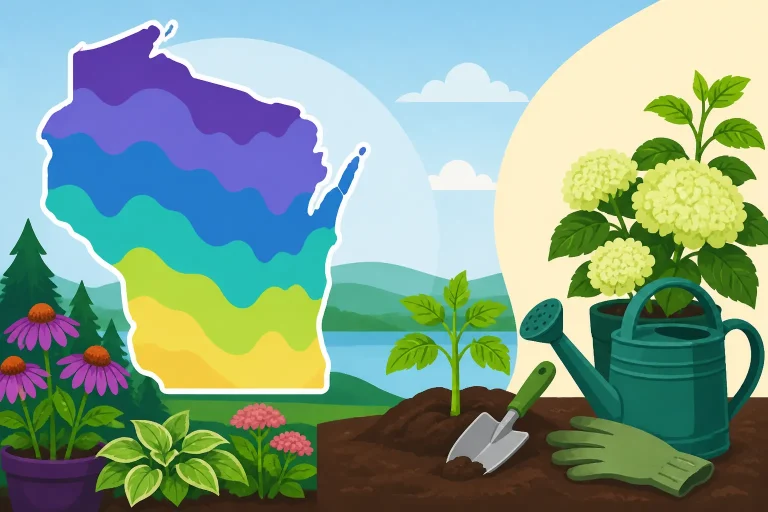
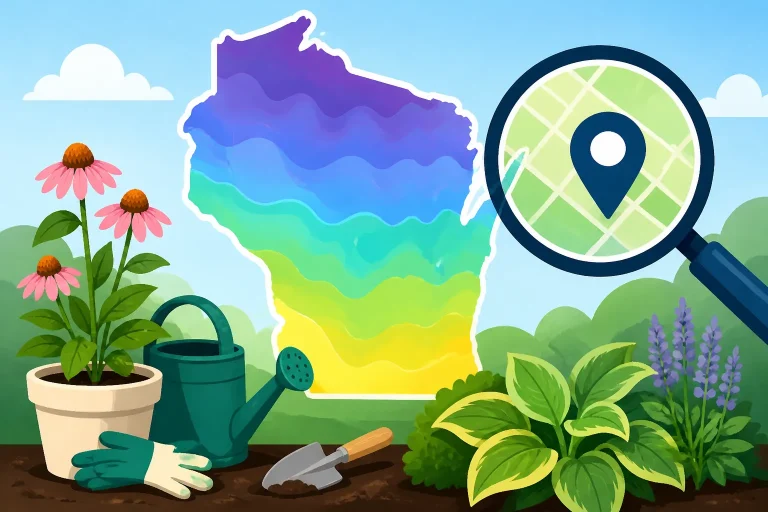
A ZIP-code lookup gives you a starting point for understanding the winter conditions associated with your area. Use the result to narrow a search for plants, not as a guarantee that every cultivar described as hardy in that zone will thrive in your yard. A postal area can include different exposures and growing conditions, and the conditions in a particular garden can differ from those represented by a broad map.
Look up the ZIP code where the plant will grow, rather than relying on a previous address, a nearby city, or a general description of Wisconsin. If a map result shows a zone, remember that ZIP codes or areas fall in a zone on the Plant Hardiness Zone Map; a ZIP code does not describe every part of every property. For an explanation of how to use the map, see Wisconsin Planting Zones Explained: Checking Your USDA Hardiness and How to Look Up Your Wisconsin Hardiness Zone by ZIP Code.
A zone is most useful as a screening tool for cold tolerance. It can help you set aside cultivars that are plainly unsuitable for your region, but it does not answer every question that matters for plant selection. A cultivar that can withstand winter may still struggle to ripen fruit before cold weather, flower poorly in a shaded yard, or fail in soil that stays wet. Conversely, a plant that needs a little extra protection may do well in a sheltered spot where the conditions suit it.
The distinction matters because “hardy” can be used casually to mean several things: surviving winter, returning reliably, producing a crop, or simply growing vigorously during the warm season. When comparing plants, look for information that explains what the claim means. If a listing gives only a hardiness zone or a general label such as “cold hardy,” use it as an initial clue and seek more specific cultivar details before committing.
A ZIP-code result also cannot predict the weather in a particular future season. A plant’s winter survival depends on more than its mapped zone, and spring or autumn conditions can affect growth and harvest even when a cultivar is suited to the local winter minimum. Treat the map as one part of your decision, alongside site conditions and the plant’s intended use.
Read cultivar information as a set of trade-offs
The University of Wisconsin-Madison Division of Extension guide and fact sheet describe cultivar flavor, ripening date, winter hardiness. These traits belong together when you compare options. A cultivar may be a strong choice for one reason and a compromise for another, so the best match is usually the one that fits your priorities and your site—not necessarily the one with the most impressive single rating.
Winter hardiness
Winter hardiness is a useful filter for woody plants, perennials, and other crops that remain outdoors through winter. Look for cultivar-specific details rather than assuming that all members of a crop behave alike. If information is available only for the general plant type, treat it as less precise than a description that names the cultivar.
A hardiness description is not a promise of survival in every yard. Exposure, drainage, snow cover, wind, and the plant’s condition can influence how it comes through winter. A cultivar listed as suitable for a broad region may be a sensible starting point, but local circumstances still matter. When a plant is important to your garden or expensive to replace, it can be prudent to favor a cultivar with a stronger margin for cold rather than choosing one whose hardiness seems borderline.
That does not mean selecting the coldest possible plant in every case. A cultivar chosen only for winter survival may not offer the flavor, size, appearance, or harvest period you want. Think of hardiness as a threshold to meet, then compare the remaining options on the qualities that affect your use of the plant.
Ripening date and maturity
Ripening information helps you judge whether a crop is likely to mature in the time available at your site. This is particularly important when the harvest depends on fruit reaching full flavor or when a crop must finish before the season changes. For vegetables, look for the maturity description and understand what it measures; the details may refer to a particular stage of harvest rather than the time a plant needs under every garden condition.
Treat a published ripening or maturity date as a comparison aid, not a calendar appointment. Weather, planting time, soil temperature, light, water, and plant health can affect development. If your season tends to be challenging for a crop, a cultivar that ripens earlier may provide a useful cushion. That advantage is relevant only if its other traits also suit your garden.
For more context on the relationship between cultivar choice and local conditions, see Matching Vegetable and Fruit Cultivars to Your Local Hardiness Zone. If you are selecting vegetables, Short-Season Vegetable Varieties Selected for Wisconsin Gardens can help you think about maturity as part of the decision rather than treating a zone label as the whole answer.
Flavor and intended use
Flavor matters differently depending on how you plan to use the harvest. A cultivar suited to fresh eating may not be your first choice if you want fruit for cooking or storage. For vegetables, the qualities you value might include tenderness, texture, sweetness, or how well a crop holds after picking. For fruit, consider whether you want to eat it fresh, preserve it, or use it in cooking.
Descriptions of flavor are often broad, so compare more than the marketing phrase. Look for information about the cultivar’s intended use and whether its harvest characteristics match your plans. If you have several options with similar hardiness and maturity, flavor and use can become the deciding factors.
Match the cultivar to the kind of plant you are growing
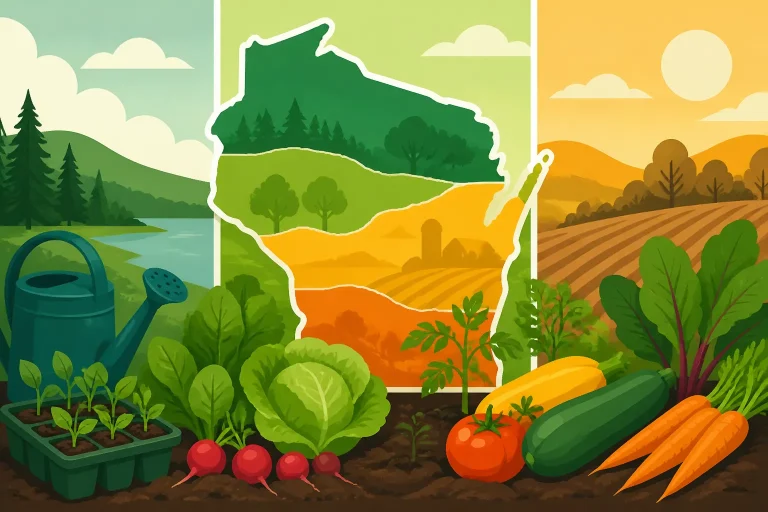
A single selection method does not fit every crop. A vegetable that you sow and harvest within one season raises different questions from a fruit tree that needs a suitable site and long-term care. Start by identifying the kind of plant you want, then focus on the traits that matter most for that group.
Vegetables
For a vegetable, consider how quickly the cultivar matures, whether it suits the season you have, and how you want to harvest or use it. A fast-maturing choice can be helpful when the growing window is tight, but it is still important to check its flavor, growth habit, and intended use. A cultivar that matures quickly is not automatically the best fit if it produces a harvest you will not use or needs conditions your garden cannot provide.
Also check whether the crop is intended for direct sowing or transplanting, and whether its planting schedule fits your plans. The same cultivar can perform differently depending on when it is started and how it is established. Use a regional planting calendar to work out a practical schedule, then compare cultivars that fit that schedule. Wisconsin Vegetable Planting Guide: What to Plant by Region and Wisconsin Vegetable Planting Calendar: Spring and Fall Schedules offer useful next steps for connecting plant selection with timing.
When choosing vegetables, distinguish between a cultivar’s maturity information and a date on the calendar. A catalog description may help compare options, but it cannot account for the exact conditions in your bed or the weather during the season. Keep a note of what you plant and when you harvest; those observations can help you decide whether to repeat a cultivar or try an earlier option next time.
Fruit trees and small fruits
For fruit trees and small fruits, compare winter hardiness with ripening period and the harvest you want. A cultivar may tolerate local winter conditions yet produce fruit later than you would prefer. The reverse can also be true: an early harvest may be attractive, but the cultivar still needs to be suitable for the site and the conditions where it will grow.
Consider the long-term nature of the planting. A tree or berry planting takes up space and can be harder to replace than an annual crop. Before settling on a cultivar, check its expected mature size, pollination needs if relevant, soil and light preferences, and any care requirements. Those are separate questions from hardiness, but they can determine whether a cultivar succeeds in the location you have chosen.
Do not assume that a cultivar’s broad regional reputation guarantees a good harvest in your yard. A cold-tolerant plant may survive but flower or ripen differently under local conditions. For a small orchard or berry patch, compare the cultivar descriptions carefully and consider how its harvest period fits your plans.
Perennials, herbs, and landscape plants
For a perennial or landscape plant, winter survival may be a central concern, but it is not the only one. A plant can be hardy and still struggle in shade, exposed wind, poorly drained soil, or a location that stays dry. Check whether the plant’s light and soil preferences match the intended site before choosing among cultivars.
For culinary herbs, clarify whether you want a plant to remain outdoors year-round or are willing to grow it in a pot and protect it seasonally. A cultivar or species that performs well in a sheltered bed may not be a suitable choice for an exposed spot. Likewise, a plant that grows successfully in a container may need a different overwintering plan from one planted in the ground.
It helps to separate the questions: first, can the plant tolerate the winter conditions expected at your site? Then, will the location meet its needs during the growing season? Finally, does the cultivar offer the appearance, harvest, or use you want? Keeping those questions separate makes it easier to notice when a plant’s hardiness is strong but another requirement is a poor match.
Account for your yard’s microclimate
The ZIP code points you toward a regional starting point; the planting location determines what conditions the plant will actually face. Two places within the same general area can differ in sun, wind, drainage, and how quickly they warm or cool. A careful look at the specific bed or planting spot can prevent a common mistake: choosing a suitable cultivar for the region, then putting it in a location that does not suit the plant.
Observe before choosing the spot
Notice whether the site receives open sun, partial shade, or substantial shade, and whether nearby structures or trees change the light during the day. Check whether water drains away or tends to collect after rain. Consider how exposed the planting area is to wind and whether it is beside a wall, fence, paved area, or other feature that may affect local conditions.
Low areas can behave differently from higher ground, and sheltered corners can behave differently from open ground. These observations do not replace cultivar information, but they help you decide which plants to investigate further. For a closer look at site-level frost differences, see Dane County Garden Microclimates: How Buildings and Slopes Shift Frost and Spotting Frost Pockets in Wisconsin Valleys and Low Spots.
A location that feels comfortable in mild weather can still be a challenging place for a plant. For example, poor drainage may matter more than a small difference in hardiness, while a very exposed site may make a borderline choice riskier. Use the site assessment to flag potential problems before you buy rather than expecting a cultivar label to overcome them.
Separate winter hardiness from frost timing
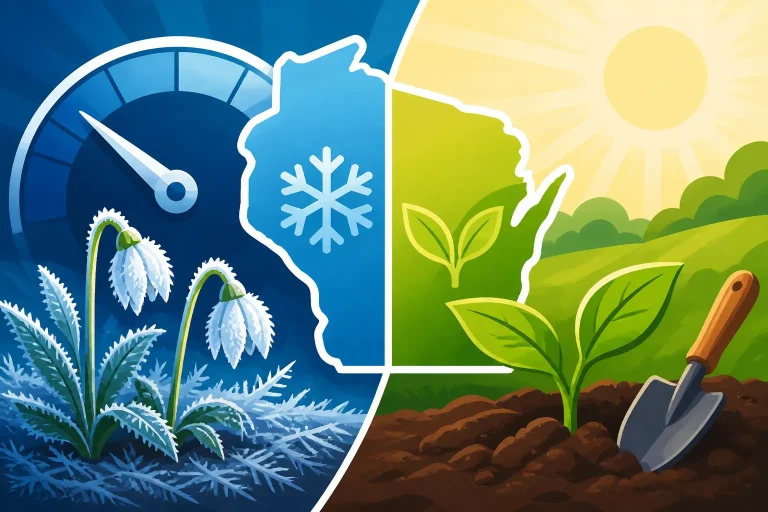
A zone lookup and a frost calendar answer different questions. Winter hardiness concerns how a plant tolerates cold over winter; frost timing concerns the conditions that can affect tender growth in spring or autumn. A perennial may survive winter yet be vulnerable when new growth appears. An annual vegetable may be unaffected by winter hardiness ratings but still need careful scheduling around spring conditions.
Avoid treating a regional average or a familiar planting date as a guarantee. Frost risk changes from year to year, and local exposure can shift conditions within a yard. For seasonal planning, use Understanding Wisconsin Last Frost Dates: Probability vs Safe Timing and Looking Beyond Frost Dates: Checking Weather and Soil. Those topics are especially useful when a cultivar’s performance depends on planting or transplanting at the right point in the season.
Even with a well-chosen cultivar, a cold snap can affect newly emerged growth or a crop nearing harvest. Keep the cultivar decision and the planting-date decision connected, but do not confuse them. Choosing a plant that suits your zone does not remove the need to watch the weather and adjust garden tasks when conditions call for it.
Build a shortlist instead of choosing from one label
Once you have a zone estimate and a site in mind, compare a manageable group of cultivars using the information that affects your decision. A shortlist keeps you from getting pulled toward a single attractive description or selecting a plant before checking its growing requirements.
Start with the job the plant needs to do. Decide whether your priority is a reliable winter survivor, an early harvest, a particular flavor, a compact growth habit, or a certain use. You may have several priorities, but ranking them helps clarify which trade-offs are acceptable. If a cultivar meets your hardiness needs but not your harvest or site needs, it may not be the right choice.
Use a comparison table or notebook with fields such as:
- Cultivar name and plant type
- Hardiness information and the source of that information
- Ripening or maturity description
- Flavor and intended use
- Light, soil, and drainage preferences
- Whether the plant needs special pollination or support
- The location where you plan to grow it
- Any uncertainty that needs checking before purchase
The table need not be complicated. Its purpose is to put the same questions beside each option so that you can compare them fairly. If a listing does not provide a detail you consider important, mark it as unknown rather than assuming the cultivar will meet that need.
| What to compare | What to look for | Why it matters |
|---|---|---|
| Winter hardiness | Cultivar-specific information when available | Helps screen for winter survival, while leaving room for site effects |
| Ripening or maturity | How the timing is described and what stage it refers to | Helps judge whether the crop fits your growing season and harvest plans |
| Flavor and use | Fresh eating, cooking, preserving, or another intended use | Helps ensure the harvest suits how you plan to use it |
| Site requirements | Light, soil, drainage, and exposure preferences | Identifies mismatches that a zone result cannot reveal |
| Planting and care | Whether the crop needs a particular establishment method or ongoing support | Connects cultivar choice to the work and space you can provide |
| Confidence in the information | Whether details are specific, incomplete, or based on a general plant description | Keeps uncertain claims from being mistaken for guarantees |
When you compare options, distinguish between cultivar-specific information and general advice about the crop. A statement about a whole species may be useful background, but it may not describe meaningful differences among cultivars. If the information is unclear, check the plant’s label or ask the seller for the cultivar name and supporting details. Avoid making a decision based only on a vague description when the plant will be a long-term investment.
A colder-subzone approach can be a sensible way to reduce winter risk when the choice is close, but it is not a substitute for checking the plant’s other needs. For more on weighing that choice, read Choosing Hardy Cultivars: Erring on the Colder Subzone in Wisconsin. A cold-hardy cultivar that needs soil or light conditions your yard cannot provide may be a worse match than a slightly less hardy option in a genuinely suitable, protected location.
Turn the shortlist into a planting and learning plan
Selecting the cultivar is only part of the process. Your planting schedule, preparation, and observations help you learn whether the choice was a good fit. A simple plan makes it easier to separate problems caused by a cultivar mismatch from problems caused by timing or location.
Before planting, confirm the cultivar name and check that the plant you receive matches the description you compared. Similar common names can refer to different plants, and a label that identifies only a broad crop type may not give you enough information to verify your selection. Keep the label or a written record with the cultivar name and where you planted it.
Then connect the plant to the appropriate calendar. For vegetables, determine whether you are sowing seeds or planting starts and whether the crop belongs in a spring or fall schedule. For perennial plants, decide whether the selected spot is prepared and whether the plant can be established there without needing to move it later. A planting calendar helps with timing, but local forecasts and soil conditions still deserve attention. The related piece Checking Spring Forecasts and Frost Risk Before Transplanting can help with that step.
Keep basic observations through the season. Record whether the plant established well, when it flowered or began producing, when the crop was ready, and whether the flavor met your expectations. Note the site conditions too, especially if the plant did poorly. This makes the next decision more useful: you can identify a cultivar that was too slow, a location that was too wet, or a planting period that did not suit the crop.
Avoid drawing a sweeping conclusion from one difficult season. Weather can affect growth, ripening, and winter survival, so a disappointing result does not automatically prove that the cultivar is unsuitable. Look for patterns and consider whether the issue points to the plant, its location, or the way it was established. If the plant is healthy but its harvest is later than you want, maturity information may guide a change. If it struggles in a wet bed, changing the cultivar may not solve the underlying drainage problem.
For an annual crop, trying a different cultivar in a later planting can be a practical way to compare results. For a tree or perennial, make the initial site and cultivar decision carefully because the commitment lasts longer. Either way, maintain a record of what you selected and why. A note that a plant was chosen for winter hardiness but later than desired at harvest is more useful than a general memory that it “did not work.”
Common mistakes when using zone information
Treating a zone as a complete growing profile
A zone result does not tell you about every feature of a garden. It cannot describe the soil, amount of sunlight, drainage, exposure, or the exact weather in the season ahead. Use the result to narrow choices, then assess those other factors independently.
Treating all cultivars of a crop as interchangeable
Cultivars can differ in the traits that matter to gardeners, including hardiness, harvest timing, and flavor. A general statement about a crop is not always enough to select a particular cultivar. When possible, compare information that names the cultivar rather than relying only on a broad description.
Choosing only by winter survival
A plant that survives winter but produces a late or unwanted harvest may not meet your goals. Likewise, a plant with appealing flavor may be a poor choice if its winter hardiness is unsuitable for the site. Consider the traits together and decide which are essential.
Assuming a planting calendar guarantees success
A calendar is a planning aid, not a forecast. A suitable date on paper cannot account for every cold spell, wet bed, or delayed warm-up. Use local conditions to adjust planting and transplanting, and be prepared to wait when the weather or soil is not ready.
Overlooking the exact planting site
A cultivar that suits the broader area can still fail in a poorly drained or overly exposed spot. Assess the location before purchase, especially for plants that are difficult to move later. If a site is unsuitable, changing the planting location may be more useful than searching indefinitely for a tougher cultivar.
Accepting an unclear label without asking questions
If the name or growing information is incomplete, ask the seller to clarify what plant and cultivar are being offered. Check whether the description refers to winter hardiness, maturity, or general growing conditions. If those details are unavailable, weigh the uncertainty before making a long-term commitment.
Frequently Asked Questions
Is a ZIP-code zone enough to choose a cultivar?
No. It is a useful first filter for winter hardiness, but cultivar maturity, site conditions, and intended use also affect whether a plant is a good match.
Should I always choose the most cold-hardy cultivar?
Not necessarily. Strong winter hardiness can be valuable, but compare it with ripening time, flavor, and the plant’s site requirements. The best choice is the one that meets your needs without an important mismatch.
Does a hardiness rating tell me when to plant?
No. Hardiness and planting timing address different issues. Use a regional calendar and current conditions to plan sowing or transplanting, and consider frost risk separately.
What should I do when cultivar information is missing?
Treat the missing detail as unknown. Look for a cultivar-specific description or ask the seller to clarify the name and growing characteristics before relying on a general claim.
Sources
- University of Wisconsin-Madison Division of Extension — Home Fruit Cultivars for Southern Wisconsin – Wisconsin Horticulture (checked November 15, 2026)
- University of Wisconsin-Madison Division of Extension — Home Fruit Cultivars of Northern Wisconsin – Wisconsin Horticulture (checked November 15, 2026)
Disclaimer
This article is for general informational purposes only and does not constitute professional advice. Laws, prices and regulations vary by location and change over time. Consult a qualified professional for guidance on your specific situation. Wisconsin Gardening Guide is not a government agency and is not affiliated with any university extension, state department of agriculture or other government agency.