Wisconsin Vegetable Planting Guide: What to Plant by Region
Wisconsin gardeners often want one planting calendar, but a date that works in southern Wisconsin may be too early in the north or along a cool lakeshore. A better plan starts with your region, the crop’s tolerance for cold, and the condition of your soil. Use this guide to build a flexible schedule for spring, summer, and fall.
How to use a Wisconsin planting guide
Wisconsin’s growing season does not begin everywhere at once. Spring conditions tend to arrive earlier in the south and later in the north, while lake-influenced areas may warm more slowly than inland yards. Even nearby gardens can differ: a sunny, sheltered bed may be ready before a low spot that holds cold air or wet soil.
Treat planting dates as planning windows, not promises. A calendar can help you decide what to start indoors, what to sow outside, and what to save for warmer weather. Before planting, check your local forecast and the soil itself. A warm afternoon does not guarantee that the ground is warm enough for a heat-loving crop, and an average frost date does not mean frost cannot occur afterward.
The main distinction is between cool-season crops and warm-season crops:
- Cool-season crops can handle cool conditions and are often planted before the last spring frost, once the soil is workable.
- Warm-season crops need warmer soil and settled weather. Frost can injure or kill many of them, so they belong later in spring.
- Fall crops are scheduled backward from the expected end of the growing season. Some cool-season vegetables tolerate light cold, but their growth slows as days shorten and temperatures drop.
For local timing, start with Wisconsin Vegetable Planting Calendar: Spring and Fall Schedules and Understanding Wisconsin Last Frost Dates: Probability vs Safe Timing. Frost dates are probabilities, not fixed deadlines. Use them alongside current forecasts rather than as a guarantee.
How planting timing shifts by Wisconsin region
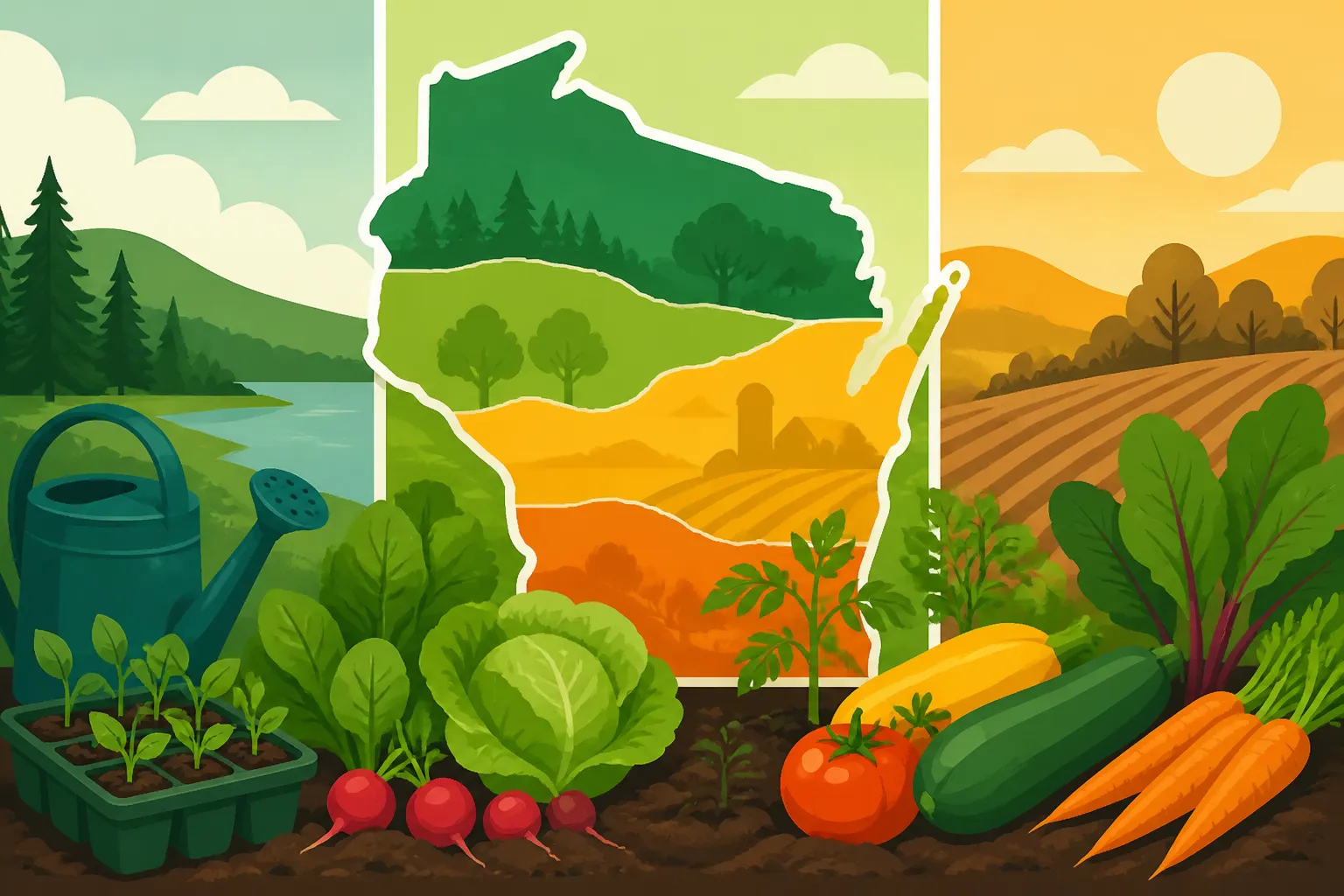
A useful statewide plan has three broad regions: northern Wisconsin, central Wisconsin, and southern Wisconsin. These are practical gardening zones, not precise climate borders. Local elevation, nearby water, exposure, and yard layout can shift conditions within any region.
| Region | Spring pattern | What that means for planting |
|---|---|---|
| Northern Wisconsin | Spring warmth and workable soil generally arrive later than in the south. The growing season is often more constrained by the timing of spring and fall cold. | Prioritize cool-season crops and quick-maturing choices. Wait for reliably warm soil before planting tender crops, and leave enough time for fall vegetables to mature. |
| Central Wisconsin | Conditions often fall between northern and southern schedules, but can vary with location and exposure. | Use a middle-of-the-state calendar as a starting point, then adjust based on local frost risk, soil warmth, and forecast conditions. |
| Southern Wisconsin | Spring planting conditions often arrive earlier than farther north, though cold snaps and wet soil can still delay work. | Cool-season crops may go in first; warm-season crops still need warm soil and a suitable forecast. A longer season can also allow more succession sowing. |
| Eastern lakeshore areas | Lake influence can delay warming in some places, even when nearby inland areas feel ready. Wind and exposure also affect beds. | Check the actual bed rather than relying on a nearby inland date. Avoid assuming that a southern location automatically means an early planting window. |
These are relative patterns, not fixed county schedules. How Vegetable Planting Dates Shift From South to North Wisconsin explains how to adjust a calendar across the state, while How Lakeshore Breezes Delay Spring Sowing in Eastern Wisconsin is useful if your garden is near Lake Michigan.
Northern Wisconsin
In northern Wisconsin, spring planting can be delayed by cold soil and the risk of later frost. That does not mean the whole garden needs to wait. Peas, spinach, radishes, and other cool-season crops can often be considered before tender crops, provided the soil is workable and not saturated. These crops are more tolerant of cool conditions, though seedlings still need reasonable growing conditions.
Because the warm part of the season is shorter, avoid spending too much of it waiting for every crop to reach the same planting date. Prepare beds early when they are dry enough to work, start appropriate seedlings indoors, and select crops that have enough time to mature locally. For a fall harvest, sowing dates matter: a crop planted too late may produce leaves but not reach a useful harvest size before growth slows.
Northern gardens also benefit from a realistic crop list. If a vegetable needs a long stretch of warmth, consider whether it fits your site and schedule before dedicating much bed space to it. Look for crops with maturity timing suited to the available season, and use protected growing space only if you can manage its temperature and ventilation.
Central Wisconsin
Central Wisconsin is not a single planting schedule. Conditions can differ between exposed rural beds, sheltered town gardens, and sites with cold-air drainage. Use a regional calendar to set a rough order of work, then adjust based on what is happening at your site.
A practical approach is to divide spring into stages. Start with soil preparation and hardy crops; add crops that tolerate cool weather as conditions permit; and hold tender seedlings until the soil and forecast support them. This staged approach reduces the chance of losing a whole planting to one cold snap.
For fall, do not wait for the first cool night to start planning. Count backward from the likely end of the harvest window, allowing time for germination and growth. Planning an Autumn Harvest: When to Sow Late-Season Crops can help you think through that schedule.
Southern Wisconsin and the lakeshore
Southern Wisconsin often has a longer spring-to-fall growing window than northern parts of the state, but that is not a reason to plant every crop early. A sunny inland bed can warm quickly, while a low, wet, or exposed bed may lag. In eastern areas, cool lake-influenced conditions may delay sowing compared with inland sites at a similar latitude.
In southern gardens, the main advantage is flexibility. Cool-season crops can get started early when conditions allow, followed by warm-season crops after soil warmth and frost risk are suitable. Later, another round of greens, roots, and other cool-season vegetables can extend the harvest. The trade-off is that early planting still carries risk: a warm spell can be followed by cold weather, and tender crops do not become frost-proof simply because the calendar says spring.
What to plant first: cool-season vegetables
Cool-season vegetables are the first group to consider in spring. They generally tolerate cooler conditions better than warm-season crops, and many can be sown directly into the garden. The soil still needs to be workable. Digging, sowing, or transplanting into wet ground can compact it and damage its structure.
Common early options include peas, spinach, radishes, lettuce, and other garden greens. Root crops such as carrots and beets are also part of many spring plans, though each crop has its own germination and soil needs. Brassicas such as broccoli and cabbage are often started indoors or planted as transplants rather than waiting for seed to grow outdoors. Consult crop-specific timing guidance, such as Cool-Season Crops Wisconsin Gardeners Can Plant Before Last Frost and Wisconsin Spring Seed Starting: Indoors to Outdoor Transplanting.
Prepare the bed before sowing
Check whether the soil is ready by taking a handful and gently squeezing it. If it is muddy, sticky, or forms a dense ball, give it more time to dry. If it crumbles instead of smearing, it may be workable. This simple check is more useful than trying to force a planting date when the bed is still wet.
Clear weeds and leftover plant material, then prepare a fine surface for small seeds. Keep the seedbed evenly moist while seeds germinate, especially if spring weather turns windy or dry. Small seeds can dry out quickly near the surface, while heavy watering can wash them into clumps or expose them.
For crops that are slow to emerge, mark the row so you can distinguish seedlings from weeds. Sowing a short row at a time can also make care easier and keep more vegetables at a harvestable stage rather than producing everything at once.
Direct sowing and transplants
Some vegetables are straightforward to sow outdoors, while others can benefit from indoor starts. Direct-sown crops avoid transplant shock and do not require space under lights, but they depend on suitable outdoor soil conditions. Indoor starts give seedlings a head start, but they need enough light and a careful transition to outdoor conditions.
Do not assume that every early crop should be started indoors. Crops that dislike root disturbance or grow quickly may be simpler to sow in place. If you are choosing what to start, Easy Vegetables to Direct Sow Without Indoor Grow Lights offers options that can reduce equipment and timing demands.
Transplants need hardening off before they move into the garden. Gradually introduce them to outdoor light, wind, and temperature changes rather than placing tender indoor plants in full sun for a whole day. Hardening Off Potted Vegetable Seedlings Before Outdoor Planting covers the transition in more detail.
When to plant warm-season vegetables
Warm-season vegetables need more than a frost-free forecast. Tomatoes, peppers, cucumbers, beans, squash, and sweet corn generally do better when both the air and soil have warmed. Planting them into cold ground can stall growth, even if no frost occurs. Tender seedlings may also be damaged by cold nights, strong wind, or a sudden temperature drop.
Use three checks before transplanting or direct sowing tender crops:
- Frost risk: Review the local forecast and the probability of frost for your area. Do not treat a historical average date as a guarantee.
- Soil warmth: Check the soil at planting depth, not just the afternoon air temperature. Cold soil is a warning that warm-season crops may struggle.
- Weather stability: Look beyond one warm day. A stretch of unsettled, cold weather can stress newly planted seedlings.
A sheltered bed may be ready before an exposed garden, but protection has limits. Covers can buffer conditions, yet they need to be secured and managed so plants do not overheat on sunny days. A cover also does not make a tender crop immune to severe cold. See When Is It Safe to Plant Vegetables Across Wisconsin? for a broader decision process, and Planting Tomatoes and Peppers in Spring: Safe Soil Warmth for the crops that are especially sensitive to chilly planting conditions.
Direct-sown warm crops
Beans, corn, cucumbers, and squash are commonly sown outdoors once conditions suit them. Cold, wet soil can delay germination or cause seed to fail, so wait for suitable conditions rather than sowing solely to get an early start. In northern Wisconsin, a later but well-timed sowing can outperform an early one that sits in cold ground.
Sweet corn needs enough space for effective pollination. A very short, narrow row may not produce full ears because corn relies on wind to move pollen between plants. In a small yard, consider whether you can plant a suitable block rather than one long, sparse row; Is Your Yard Big Enough for Corn? Spacing and Pollination explains the space question.
Transplanting tomatoes, peppers, and other tender crops
Before moving seedlings outdoors, make sure they are sturdy and acclimated. Avoid planting a stressed seedling immediately before a cold or windy spell. Planting deeply or staking may be appropriate for some crops, but the key timing decision is whether the seedling can establish without being repeatedly chilled.
A warm spell can tempt gardeners to plant tomatoes and peppers ahead of the season. If conditions reverse, seedlings may stop growing or suffer injury. Why Early Warm Spells Can Trap Wisconsin Tomato Transplants and Checking Spring Forecasts and Frost Risk Before Transplanting offer useful context for avoiding that mistake.
Succession planting through summer
Planting a full bed once can create a glut, followed by a long gap. Succession planting spreads sowing dates so crops mature at different times. It can mean sowing the same crop in small batches, replacing a harvested crop with another, or using open space for a quick-growing vegetable.
The best interval depends on the crop, the weather, and how quickly your household uses the harvest. There is no need to replant every vegetable on a fixed schedule. Instead, check the seed packet’s maturity information, estimate how much you can use, and make the next sowing while there is still enough time for the crop to grow.
Make room after harvest
As an early crop finishes, remove plants that are no longer producing and assess the bed before replanting. Pull weeds, clear diseased plant material, and avoid working soil that is overly wet. If the next crop needs a different spacing or support, prepare the bed before sowing.
Good candidates for another round may include beans, radishes, lettuce, and other greens, depending on the remaining season and local conditions. Heat can make some greens bolt or taste bitter, so summer sowing may work better in a partly shaded spot or with careful moisture management. Check the crop’s needs rather than assuming every spring vegetable will perform the same way in midsummer.
A succession plan can be as simple as sowing only part of a row now and saving the rest for later. This reduces the chance of having more mature vegetables than you can harvest. For a more structured approach, see Succession Planting in Wisconsin for Steady Yields and How Staggered Sowing Dates Stretch Vegetable Harvests All Season.
Account for summer heat and moisture
Midseason conditions can be hard on young seedlings. Hot, dry weather may dry the surface where small seeds are germinating, while strong sun can stress newly planted transplants. Keep the seedbed consistently moist during germination, and give new transplants time to establish. Mulch can help conserve moisture, but do not bury small seedlings or cover a row so heavily that it prevents emergence.
If a crop fails to establish, diagnose the cause before repeating the same sowing. Check whether the seedbed dried out, whether weeds outcompeted seedlings, or whether the weather was too hot for that crop. If seeds have been stored for a while, their viability may also be a factor. Storing Surplus Vegetable Seeds in Refrigerators for Longer Sprouting and Home Vegetable Seed Storage and Germination provide more help with seed storage and germination checks.
Planning a Wisconsin fall harvest
Fall vegetables require a different kind of calendar. The aim is to give crops enough time to mature before cold weather slows growth or ends the harvest. Count backward from the likely end of your local growing window, using the seed packet’s maturity information as a guide. Build in extra time for slower growth as daylight declines and temperatures cool.
Cool-season crops are often the focus of fall planting. Depending on the crop and regional conditions, gardeners may sow greens, radishes, and other quick-growing vegetables, or start longer-maturing crops earlier in the summer. Northern gardeners generally need to be more cautious about late sowing than gardeners in the south, but all regions benefit from starting fall planning before the season feels close to ending.
For crop-specific planning, see Midsummer Sowing Options for Wisconsin Fall Harvests and Cool-Season Greens to Sow for an Extended Wisconsin Autumn.
Do not wait until autumn to start
A common planning error is to wait for cooler weather before sowing fall crops. The weather may be more comfortable then, but seeds still need time to germinate and plants need time to grow. Many fall crops are planted during summer, when heat and dry soil can make establishment challenging.
Choose a sowing window that gives the crop enough time, and provide consistent moisture while seeds emerge. In hot weather, a temporary shade cloth or a location with afternoon shade may help reduce stress, provided the crop still receives the light it needs. Keep the seedbed free of weeds, which compete for both water and space.
Extend the harvest carefully
Row covers, low tunnels, and cold frames can protect some crops from cool weather and help extend harvests. They are tools for managing conditions, not a substitute for choosing appropriate crops or sowing on time. Covers can heat up in bright weather, so ventilation may be needed. Secure them well, and monitor plants rather than leaving a covered bed unattended.
For more on season extension, see Season Extension for Wisconsin Gardens: Hoops, Mulch, and Covers and Extending Fall Greens in Wisconsin With Cold Frames and Hoops. A protected bed can be especially useful for greens, but it does not guarantee an all-winter harvest; the result depends on the crop, the structure, and the conditions at the site.
Build a calendar around your own garden
A useful planting calendar is a set of decisions you revisit, not a list of dates you follow without adjustment. Keep notes on when the soil became workable, when you sowed or transplanted each crop, and what the weather did afterward. Over time, those records can reveal whether your beds run early or late compared with a regional schedule.
Start with the site
Before choosing dates, assess the garden’s light, drainage, and exposure. A bed that gets full sun may warm sooner than a shaded one. A low area can collect cold air, while a slope or wall may create a warmer microclimate. Wind exposure can dry soil and stress transplants; poor drainage can make a bed unworkable long after the surface looks dry.
A nearby weather station provides useful context, but it cannot describe every yard. Dane County Garden Microclimates: How Buildings and Slopes Shift Frost and Spotting Frost Pockets in Wisconsin Valleys and Low Spots explain why a forecast may not match the conditions in a particular bed. If you are farther from Dane County, apply the general principles rather than treating that location’s conditions as your own.
Organize the season by crop group
Instead of writing one long list of dates, make a simple plan with crop groups:
- Early spring: Workable-soil crops and hardy greens.
- Later spring: Additional cool-season crops and transplants suited to cool conditions.
- Warm weather: Tender crops after soil warmth and forecast conditions are suitable.
- Midsummer: Succession sowings and fall crops that need time to establish.
- Late season: Harvesting and protection for crops that can tolerate cooler weather.
This order helps prevent a calendar from becoming too rigid. If spring is cold and wet, you can postpone work that would damage the soil while still preparing seeds and supplies. If conditions warm quickly, you can adjust the next step without assuming every crop should be planted at once.
Use weather tools as one input
Check forecast temperatures, frost risk, and local observations. Compare the forecast with the garden’s microclimate, especially if your yard has a low spot, a sheltered wall, or a lakeshore exposure. A broad regional forecast can miss a colder pocket or a warmer courtyard.
For a weather-station approach, Wisconsin Frost Tool Guidance: Picking the Nearest Weather Data and Using Online Weather Tools to Track Wisconsin Spring Frost Windows can help you choose information that is relevant to your location. If frost tools show a probability, remember that the probability is not a promise that the remaining risk has disappeared. A planting decision should also reflect how costly it would be to lose the crop and whether you can protect it.
Keep the plan adaptable
Use a calendar to narrow your choices, then make the final call based on conditions. If you have limited time, prioritize crops that match your region and the space you can maintain. A smaller bed planted at the right time is often easier to manage than a large garden filled with crops that all need immediate attention.
When spring runs late, start with the crops that tolerate cool conditions and avoid forcing tender plants into cold soil. When spring warms early, check for a return to cold weather before transplanting. When summer is hot, focus on keeping seedlings established and schedule fall sowings before the season slips away. The order of planting is more dependable than any one statewide date.
Frequently Asked Questions
Can I use one planting calendar everywhere in Wisconsin?
Use a statewide calendar as a starting point, not as a precise schedule. Northern, central, southern, and lakeshore gardens can differ in soil warming, frost risk, and season length. Adjust the calendar for your location and garden conditions.
Should I plant vegetables as soon as the last frost date passes?
Not necessarily. Frost dates are probabilities, not guarantees, and different crops have different temperature needs. Check the forecast, soil warmth, and the crop’s cold tolerance before planting.
What can I plant before the last spring frost?
Some cool-season vegetables, including peas, spinach, radishes, and other greens, may be planted in suitable conditions before the last spring frost. Soil should be workable, and crop-specific guidance still matters.
When should I sow vegetables for a fall harvest?
Plan backward from the expected end of your local growing window, using the crop’s maturity information as a guide. Many fall vegetables need to be sown during summer so they have time to grow before days shorten and temperatures drop.
Why do my planting dates differ from a neighbor’s?
Gardens can vary in sun exposure, drainage, elevation, wind, and cold-air drainage. Lakeshore influence can also delay warming in some areas. A neighbor’s date is useful context, but your own soil and microclimate should guide the final decision.
Disclaimer
This article is for general informational purposes only and does not constitute professional advice. Laws, prices and regulations vary by location and change over time. Consult a qualified professional for guidance on your specific situation. Wisconsin Gardening Guide is not a government agency and is not affiliated with any university extension, state department of agriculture or other government agency.