How to Look Up Your Wisconsin Hardiness Zone by ZIP Code
A ZIP code can give you a quick starting point for choosing trees, shrubs, and perennial plants, but it cannot describe every yard’s winter conditions. Use the USDA Plant Hardiness Zone Map to find the zone associated with your Wisconsin location, then check how your site and growing-season timing affect what you plant.
What a Wisconsin hardiness zone tells you
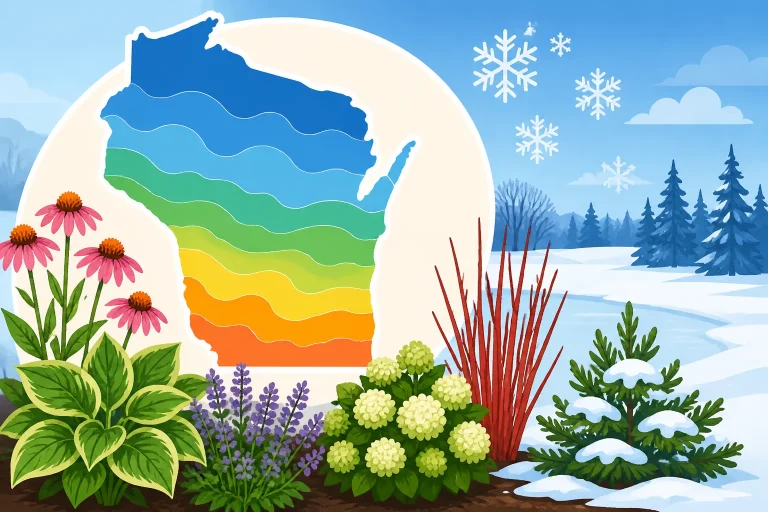
The USDA Plant Hardiness Zone Map groups locations by average annual extreme minimum winter temperature. Each main zone is divided into half-zones, such as 5a and 5b, to show smaller temperature differences. A half-zone represents a five-degree Fahrenheit step within the larger zone.
The zone is a way to compare typical winter cold, not a prediction of the lowest temperature your yard will experience in a particular year. It also does not promise that a plant will survive every winter. A severe cold snap, a long stretch of freezing weather, or a lack of protective snow cover can cause damage even to a plant listed as hardy for the zone.
Hardiness information is most useful when selecting plants that stay in the ground through winter: trees, shrubs, many perennial flowers, fruit plants, and perennial herbs. A plant label may give a range of zones in which the plant is generally considered able to withstand winter lows. Compare that range with your map result, but treat it as a starting point rather than a guarantee.
Wisconsin spans several hardiness zones. The statewide range commonly shown in Wisconsin zone resources runs from 4a through 6a, but that does not mean every part of a ZIP code or every yard falls neatly into one zone. For an overview of what the labels mean and how to read them, see Wisconsin Planting Zones Explained: Checking Your USDA Hardiness.
A hardiness zone does not tell you:
- When the last spring frost will occur.
- When it is safe to plant tomatoes, peppers, or other warm-season vegetables.
- How long your growing season will be.
- Whether your soil is warm or dry enough to work.
- How much sun, moisture, or wind exposure a particular plant will get.
- Whether a plant will flower or produce fruit reliably in your location.
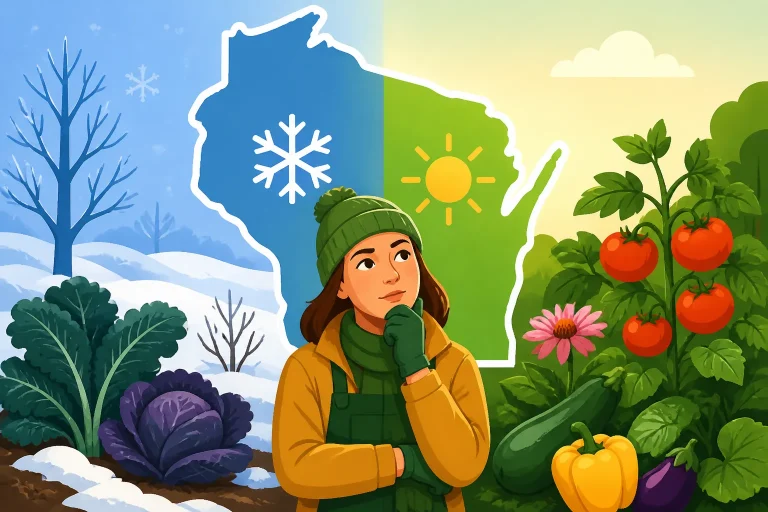
That distinction matters in Wisconsin, where a plant may tolerate winter lows but still struggle to finish producing fruit in a short season. For annual vegetables, use regional planting advice and frost information alongside the zone. Wisconsin Vegetable Planting Guide: What to Plant by Region can help connect regional conditions to crop choices.
How to look up your zone by ZIP code
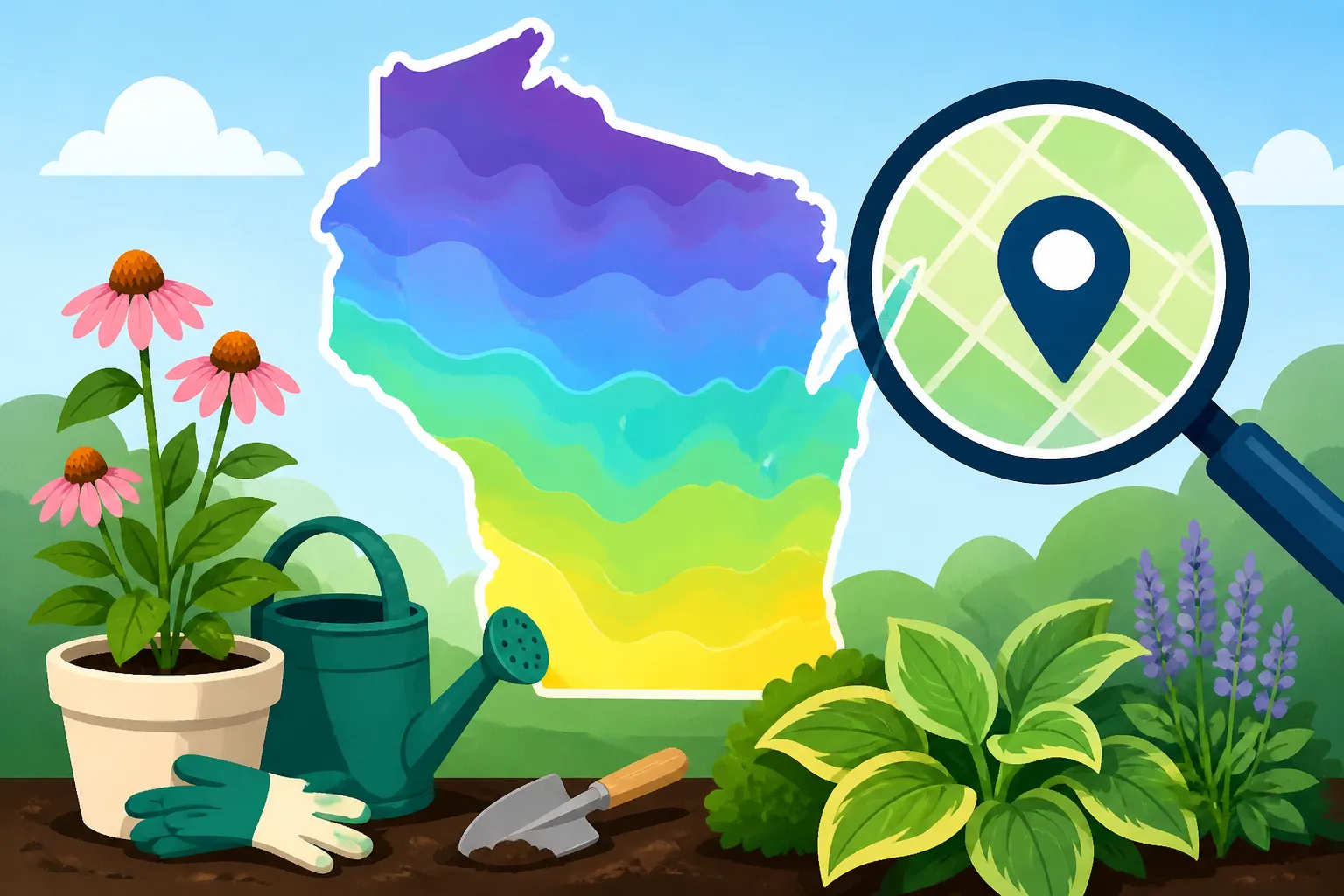
Use the USDA Plant Hardiness Zone Map as your primary reference. The map is designed to help people identify a broad hardiness zone for a location. A ZIP code search is convenient, but it is an approximate way to locate yourself on a climate map, not a property-level assessment.
- Open the USDA Plant Hardiness Zone Map. Use the map or its location search rather than relying only on a zone result copied from a general gardening page.
- Enter your Wisconsin ZIP code in the map’s search field. Check that the search result points to the right town or area. A ZIP code may cover a broader area than the place name suggests.
- Read the zone shown at the result location. Look for the full label, including the letter. The difference between 5a and 5b can matter when comparing plant hardiness ranges.
- Zoom in and inspect the surrounding map. If the result is close to a zone boundary, notice how the colors or labels change around it. Don’t assume the ZIP code itself has a single climate value.
- Compare the map result with the planting site. Consider whether your yard is especially exposed, sheltered, low-lying, or close to a large paved area or building.
- Use the zone as one selection filter. Check plant hardiness information, then consider the plant’s sun, soil, moisture, and season-length needs before buying or planting it.
If the map does not recognize the ZIP code, try searching for a nearby town or using the map’s location tools. You can also use the map to navigate to the general area and inspect the location visually. When entering a town name, confirm that the result is in Wisconsin; place names can repeat in different states.
A ZIP search is helpful when you need a first estimate, such as screening a list of plants before shopping. It is less useful for deciding whether one specific corner of a yard is warmer or colder than another. For that, the immediate site conditions matter more than the postal boundary.
If you want to compare broad patterns across Wisconsin, Wisconsin ZIP Codes and USDA Zones: Mapping 4a Through 6a covers the statewide range. A state-level overview can help you understand the map, but it still cannot determine the exact conditions at an individual home.
How to interpret a ZIP code result
A ZIP code is a postal area, not a climatic unit. It may include locations with different elevations, slopes, exposure, or proximity to water. A map search generally places a result at a representative point or location; it does not measure winter temperatures at every address in the ZIP code. That makes the result useful for narrowing choices, but not precise enough to settle every close call.
Check whether the result is near a zone boundary
If the marker or search result falls near a boundary, treat the zone as an estimate. A nearby map location may have a different label, and your garden may not match the exact point returned by a search. When a plant is rated only for a warmer zone than the result suggests, avoid assuming it will be reliable just because part of the ZIP code appears warmer.
For a plant near the edge of its listed hardiness range, you can reduce risk by choosing a cultivar rated for colder conditions. Another option is to grow the plant in a protected location or a container that can be moved, if that suits the plant and your care routine. Neither approach changes the official zone; it changes the conditions the plant experiences or the risk you are willing to accept.
A common conservative approach is to choose woody plants and long-lived perennials that are rated for the colder end of the plausible range at your site. That is particularly useful if you are investing in a tree, hedge, or perennial planting that would be difficult to replace. A plant’s ability to survive its coldest likely conditions is only one part of success, however. A hardy plant can still fail in poorly drained soil, deep shade, or a dry, windy spot.
Account for your yard’s microclimate
Conditions within a yard can differ from the location represented by the ZIP code. A south-facing wall may create a more sheltered spot; an open area exposed to winter wind may be harsher. A low place where cold air settles can experience colder conditions than a nearby slope. Paved surfaces and buildings can also affect the immediate environment.
Look at features such as:
- Exposure: Is the planting site open to winter wind, or protected by a structure or established trees?
- Slope and drainage: Does the site sit low, where cold air may collect, or on a slope that drains well?
- Sun and shade: Does the spot receive strong sun during the growing season, or stay shaded for much of the day?
- Nearby surfaces: Are there buildings, pavement, or walls that influence warmth, reflected heat, or exposure?
- Winter cover: Is the area likely to receive dependable snow cover, or is it exposed to wind that can remove it?
These factors do not give you a new official zone. They help explain why two yards with the same ZIP code—and even two planting spots on one property—may not have the same results. You can use the map for the broad winter baseline and use observations of the site to make a more cautious plant choice.
Don’t use the hardiness zone as a frost calendar
Hardiness zones describe winter minimums, not the dates of spring and fall frosts. A zone lookup cannot tell you whether a late frost is likely next week or when your garden will be safe from cold. Frost risk varies from year to year, and conditions at your yard may differ from a weather station’s reading.
That is why using a hardiness zone to decide when to transplant a warm-season vegetable can lead to a frustrating result. A tomato may be hardy enough for your area in the long-term plant-survival sense, but a newly planted tomato can still be injured by cold spring weather. Similarly, a crop’s harvest window depends on the length and warmth of the growing season, not on the zone label alone.
For planting decisions, pair your map result with local frost information and weather conditions. Understanding Wisconsin Last Frost Dates: Probability vs Safe Timing explains why an average frost date is not a guaranteed safe planting date. For a wider view of seasonal timing, Wisconsin Growing Season Calendar: Spring Thaw to Autumn Dormancy looks beyond the hardiness label.
Use the zone alongside Wisconsin planting information
Once you have a likely zone, think about the plant or crop you are choosing. The zone is most helpful when the question is, “Can this plant generally survive the winter here?” It is not enough to answer, “Will it grow well in my yard?” or “When should I plant it?”
For trees, shrubs, and perennial plants
Check the plant’s stated hardiness range and compare it with your map result. If the plant’s cold limit is at the warmer edge of the result—or the ZIP code appears to straddle a boundary—consider whether you are comfortable with a greater chance of winter injury or loss. For long-lived plants, a more cold-hardy selection may be the safer choice.
Then check the conditions the plant needs beyond winter survival. A plant can be rated hardy for a zone and still be a poor fit for a wet site, dry sandy soil, full shade, or a small planting space. Confirm that the mature plant size, light needs, soil preferences, and moisture requirements work for your yard.
For fruit plants, survival is only part of the decision. A tree or shrub may live through winter but flower or ripen fruit inconsistently if local conditions do not suit it. Consider expected season length and regional recommendations as well as the zone. The same caution applies to plants whose flowers or buds are vulnerable to spring cold even when the plant itself is winter-hardy.
For vegetable gardens
Most annual vegetables are not selected by winter hardiness zone in the same way as a tree or perennial. They are planted, harvested, and removed within a single growing season. For these crops, useful questions include:
- How soon can the crop be sown or transplanted?
- Does it tolerate cool soil, or does it need warm conditions?
- How much time does it need to mature?
- Is there enough time for a fall crop before freezing weather?
- Can a cover or other season-extension method help protect it?
A vegetable calendar should reflect regional conditions and frost windows, not just the ZIP code’s hardiness label. Wisconsin Vegetable Planting Calendar: Frost Windows and Sowing is useful for connecting seasonal timing with crop choices. For broad regional differences in planting timing, see How Vegetable Planting Dates Shift From South to North Wisconsin.
A zone result can still add context. A short-season cultivar may make more sense in a location where the frost-free growing window tends to be limited. But use cultivar maturity information and local planting guidance to make that call. Hardiness zones do not give crop maturity dates or a planting calendar.
For spring and fall timing
Do not treat the zone as a shortcut for a fixed spring planting date. A warm spell can make the season feel underway before the soil and nights are suitable for tender plants. Cold, wet soil can also slow establishment, while a late frost can injure plants that have already started growing.
Before planting, consider the crop’s temperature tolerance, soil condition, and the forecast for your location. If you are trying to time vegetables around frost, use a probability-based frost resource and watch current weather rather than relying on one calendar date. Looking Beyond Frost Dates: Checking Weather and Soil explains why the forecast and soil conditions should be part of the decision.
Fall planting also requires more than a zone lookup. The map may tell you how cold winters tend to get, but it does not show how much time a new plant will have to establish roots before the ground freezes. Plant type, soil moisture, and the remaining season all matter. For late-season vegetables, use timing guidance specific to the crop and region rather than assuming the hardiness zone determines whether a sowing will succeed.
| Question | What the hardiness zone can help with | What to check as well |
|---|---|---|
| Will a tree or shrub generally tolerate winter cold? | Compare its hardiness range with the zone result. | Site exposure, drainage, snow cover, and the plant’s other needs. |
| When can I plant tomatoes or peppers? | Provides broad context about local winter climate. | Frost risk, soil warmth, forecast, and crop-specific guidance. |
| Can I grow a perennial herb outdoors? | Helps screen plants for likely winter survival. | Cultivar hardiness, drainage, shelter, and winter moisture. |
| Will a fruit plant produce reliably? | Indicates whether winter cold may be a concern. | Season length, flowering conditions, pollination, and local cultivar advice. |
| Is a particular corner of my yard warmer? | The ZIP result gives a broad regional reference. | Microclimate features such as slope, walls, wind, and pavement. |
A practical way to choose plants after the lookup
A zone search works best as one step in a selection process. Use it to narrow the field, then check the details that determine whether a plant fits your site and goals.
- Write down the full zone label. Keep the letter, not just the main number. If the map search is near a boundary, note that the ZIP result may not represent every part of the area.
- Check the plant’s hardiness range. Look for a reputable label or cultivar description. If the plant is only rated for warmer conditions than your likely zone, decide whether the added risk is acceptable.
- Check your site. Match the plant to light, drainage, soil, and available space. Consider whether the spot is unusually exposed or sheltered.
- Check the plant’s seasonal requirements. For a fruiting plant, find out whether it needs a longer growing season or particular flowering conditions. For vegetables, check sowing, transplanting, and maturity guidance.
- Make the timing decision separately. Use frost probability, the weather forecast, and soil conditions for spring planting. For fall planting, consider how much establishment time remains.
- Keep a simple record. Note the map result, planting location, winter conditions, and how the plant performed. A few seasons of observations can help you understand your yard’s microclimates without confusing them with the official map zone.
For plantings with a high replacement cost or a long time to maturity, it can be sensible to favor plants with a comfortable hardiness margin rather than choosing one right at the edge. For inexpensive annuals, you may be more willing to experiment. That is a practical risk decision, not a change to the zone assigned by the map.
If you are using the zone to plan a whole garden, treat it as the background layer of a larger plan. Choose perennial plants that can handle likely winter lows, then organize annual vegetables around spring and fall timing. You can also compare planting advice by region and adjust for your own site. No single ZIP code result can replace the combination of plant information, local climate patterns, and observation of your yard.
Frequently Asked Questions
Can a ZIP code tell me the exact hardiness zone for my house?
No. A ZIP code search gives a useful location estimate, but postal areas are not climate boundaries. A ZIP code may include areas near more than one zone, and the map does not measure conditions at an individual property.
Should I choose the zone for the center of my ZIP code?
Use the map result as a starting point, then inspect nearby zone boundaries and consider your site. The center of a ZIP code may not match the conditions at your home, especially when the area is broad or the location is near a boundary.
Does a hardiness zone tell me when to plant vegetables?
No. It describes typical winter minimum temperatures, not spring frost dates, soil warmth, or crop maturity. Use Wisconsin regional planting information and current weather conditions to time vegetables.
What should I do if my yard seems warmer than the map suggests?
The map still provides the broad regional reference. A sheltered yard may have a milder microclimate, but that does not guarantee protection during a severe winter. For expensive or long-lived plants, choose a hardiness range with a margin for cold and consider the site’s exposure.
Is a plant guaranteed to survive if it is rated for my zone?
No. The rating is a guide to winter cold tolerance, not a guarantee. Soil drainage, wind exposure, winter moisture, snow cover, plant health, and conditions during a particular season can all affect survival.
Disclaimer
This article is for general informational purposes only and does not constitute professional advice. Laws, prices and regulations vary by location and change over time. Consult a qualified professional for guidance on your specific situation. Wisconsin Gardening Guide is not a government agency and is not affiliated with any university extension, state department of agriculture or other government agency.