Wisconsin Hardiness Zones: Matching Plants to Your Winter Minimums
Choosing plants for a Wisconsin yard can feel like a gamble: a plant may thrive through summer, then struggle after winter. A hardiness zone helps screen for cold tolerance, but it does not predict every yard’s conditions or guarantee survival. The key is to use the zone as a starting point, then weigh your site, the plant’s needs, and the risks that matter most.
What a Wisconsin hardiness zone tells you
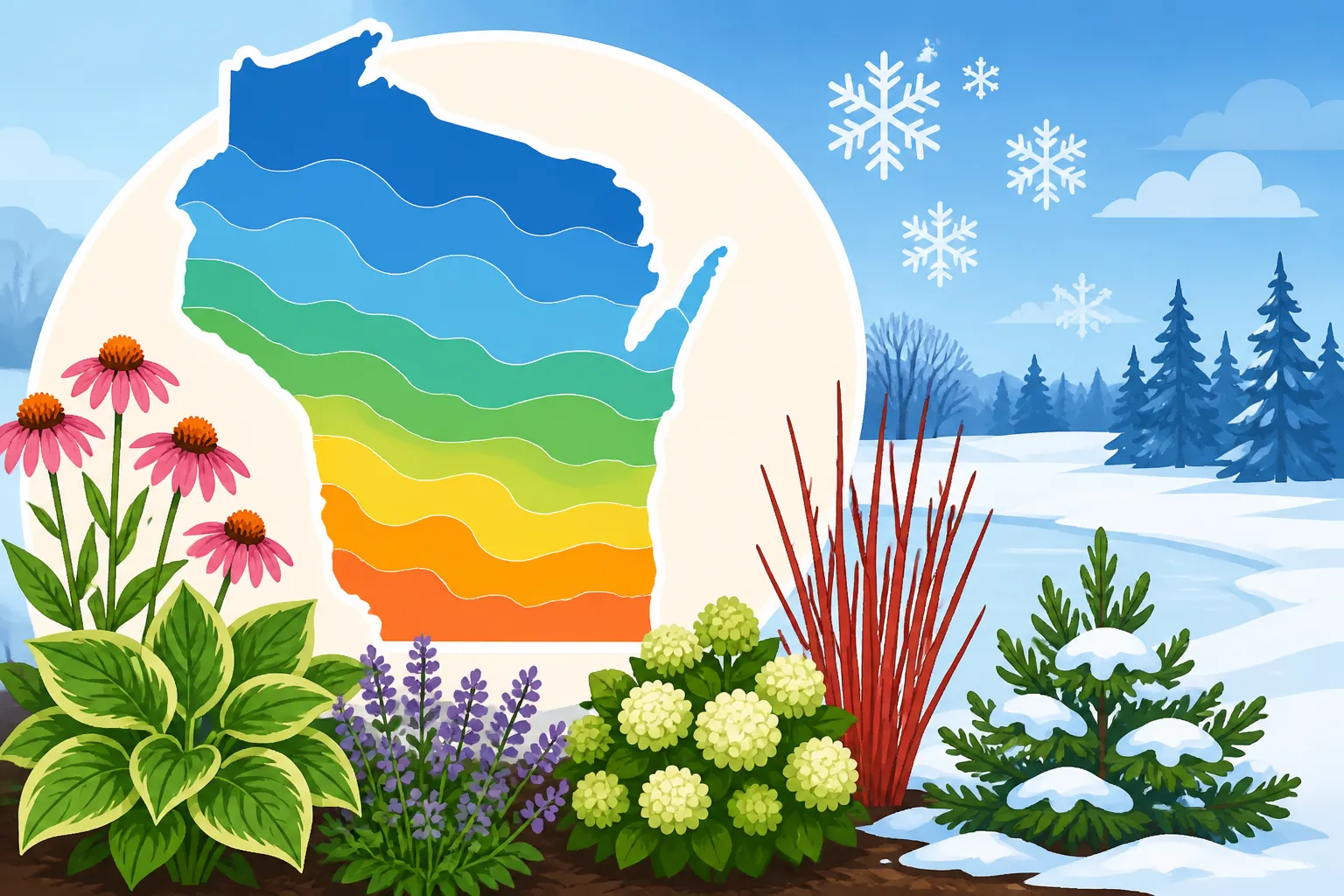
A plant hardiness zone is a tool for comparing a plant’s ability to withstand winter cold with the climate where it will grow. The central question is whether a plant can tolerate the winter minimums associated with the location where you plan to plant it.
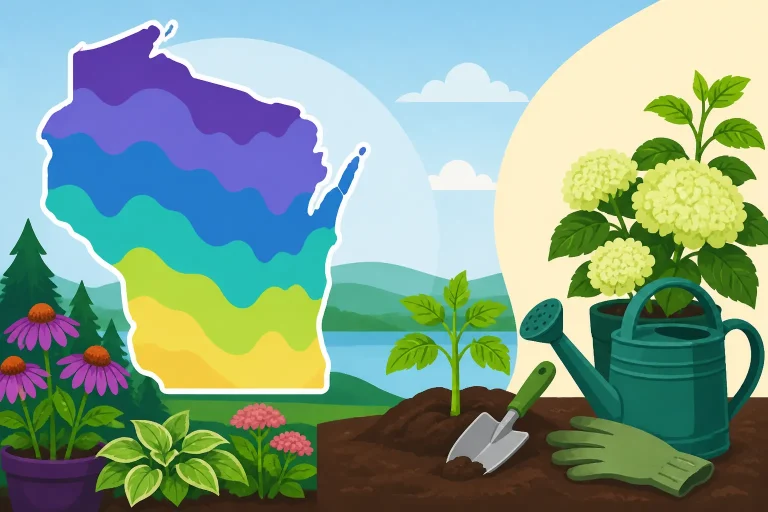
According to the University of Wisconsin-Madison Division of Extension, USDA 2023 plant hardiness zones are based on average annual minimum winter temperatures over a 30-year period. That long-term average helps make a map more useful than a record of the coldest winter a particular place has ever experienced. It also means a zone is not a forecast for the coming winter: unusually cold or mild conditions can still occur.
A zone is best understood as a broad screening guide. If a plant is described as hardy in a colder climate than your site, its winter tolerance may be a reasonable fit. If its listed tolerance is warmer than your site, it could be at greater risk from winter cold. When a plant’s hardiness range is close to your local conditions, treat that as a reason to investigate further rather than as a firm pass or fail.
This distinction matters because a zone does not describe everything that shapes plant survival. It does not tell you whether your soil drains well, whether winter wind reaches the planting site, how much snow cover it receives, or whether a plant has had enough time to establish. Nor does a zone tell you whether a plant will flower reliably, produce a useful harvest, or thrive during summer.
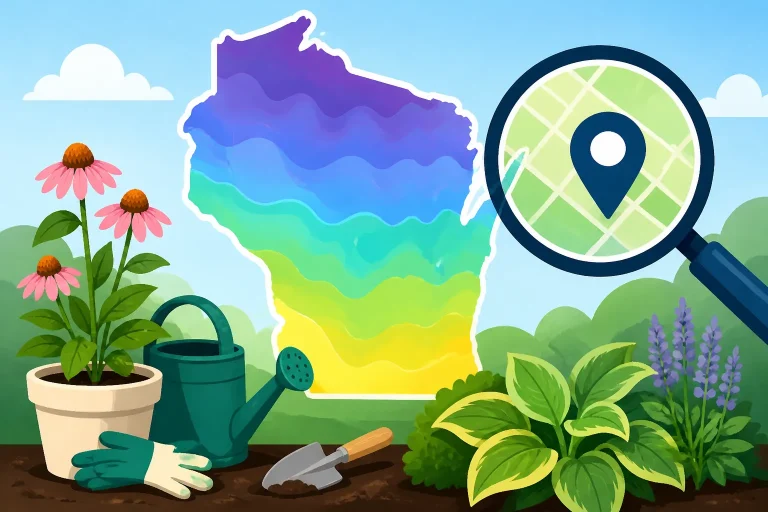
A ZIP code or city name can help you find a broad map estimate, but it cannot account for every yard-level difference. For help finding an approximate area on the map, see How to Look Up Your Wisconsin Hardiness Zone by ZIP Code. Then treat the result as a starting point for choosing plants, not as a guarantee about a particular bed, slope, courtyard, or container.
A useful way to remember the zone’s role is this: it helps you ask whether winter cold is likely to be a major constraint. It does not answer every question about whether a plant is suited to your yard.
Use zones as a screen, not a promise
A common mistake is to read a plant label as a guarantee. Hardiness information is more useful as a signal of relative cold tolerance. Even when a plant’s listed hardiness appears compatible with your location, its performance depends on more than the map.
Start by checking how the plant is described. Is the hardiness information for a particular cultivar, or only for the general species? Is it intended for a garden bed, or is the plant being sold as a container specimen? Is the information describing survival, dependable flowering, or successful fruiting? Those outcomes are related, but they are not interchangeable.
A plant can survive a winter and still look damaged, produce few flowers, or take time to recover. A plant’s buds may be more vulnerable than its woody framework. For fruiting plants, winter survival does not necessarily mean that the plant will produce a dependable crop. With a perennial that dies back above ground, survival may mean that new growth returns from the roots rather than that the old stems remain intact.
Be especially careful with plants near the edge of their listed hardiness. A small difference between the plant’s stated tolerance and your location’s mapped conditions can make the choice less dependable. A protected site may improve the odds, while an exposed or poorly drained site may make the same plant a poor bet. In this situation, look for locally appropriate recommendations, ask how the plant performs in comparable Wisconsin conditions, and consider whether you are comfortable with the possibility of winter damage.
You may also see recommendations to choose plants suited to a colder area than the location where they will be grown. That can be a useful way to build in a margin against winter stress, especially for valuable or slow-to-replace plants. But choosing a plant for greater cold tolerance does not automatically make it a better match in every other way. It still needs suitable light, soil, moisture, and space.
If you are weighing a borderline plant against a more cold-tolerant alternative, consider the cost of failure as well as the appeal of the plant. A plant that is easy to replace may be a reasonable trial in a sheltered spot. A costly tree or a central feature of the landscape deserves more careful matching.
The goal is not to eliminate every risk. It is to distinguish a plant that is a well-supported choice from one that is an experiment, then place and care for each accordingly.
Match the plant to its purpose and life stage
The right hardiness choice depends partly on what you expect the plant to do. A plant that survives in a garden is not automatically the best choice if you need reliable bloom, fruit, foliage, or structure. Before you compare labels, decide what success means for that plant.
Trees, shrubs, and woody plants
Trees and shrubs are long-term choices, so winter damage can have lasting effects on their form and appearance. Consider the plant’s hardiness information alongside its mature size, light needs, soil preferences, and exposure. A shrub that is cold tolerant but planted where water sits around its roots may still struggle. A tree suited to the region may be a poor fit if it cannot grow without crowding a nearby structure or competing for light.
Some woody plants may survive cold conditions but lose flower buds or suffer damage to exposed growth. If reliable bloom is important, do not judge the plant only by whether the main stems are likely to persist. Look for information about flowering performance in Wisconsin conditions, and consider how easily the plant can be protected or replaced.
A tree or shrub’s early establishment also deserves attention. A newly planted specimen has not yet had time to develop fully into its site. Match the plant carefully, then pay attention to watering and other establishment needs so that it is not coping with avoidable stress as it settles in.
For Wisconsin landscape options selected with local conditions in mind, Hardy Wisconsin Landscape Plants That Survive Deep Freezes can help you explore choices. Use any recommendation as a prompt to check the plant’s specific light, soil, moisture, and space requirements before deciding.
Perennials and ornamental plants
Perennials return from year to year, but their visible growth may not tell the whole story of winter survival. Some keep substantial above-ground structure; others die back and regrow. A label or catalog description may emphasize the plant’s ability to persist, while your priority may be strong flowering or tidy form. Make sure you are comparing the result you want.
Bed conditions matter too. A perennial in a sheltered, well-drained location may have different prospects from the same plant in a spot that stays wet or is exposed to wind. Group plants according to similar growing needs, not just according to what looks good together in a catalog.
If a plant is near the edge of its recommended hardiness, try it in a less prominent location before making it the centerpiece of a design. That approach lets you observe how it responds to your actual site without making the whole bed depend on a marginal choice.
For a wider look at plant selection and seasonal care, see Wisconsin Perennial and Shrub Care: Seasonal Garden Fundamentals.
Vegetables, herbs, and fruit
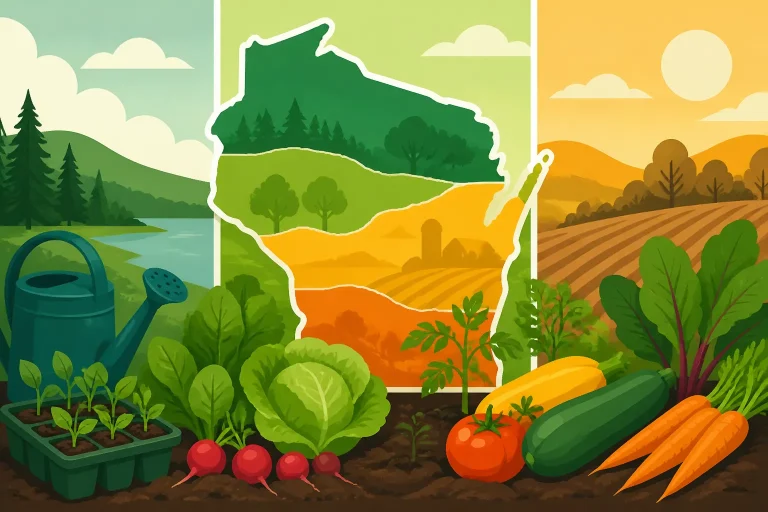
Hardiness zones can help with longer-term decisions about perennial herbs, fruit bushes, and trees, but they do not tell you when to plant an annual vegetable. Vegetable timing also depends on the crop’s growing-season needs, soil and weather conditions, and the risk of frost. A cold-tolerant perennial may survive winter yet still need suitable summer conditions to grow well.
For vegetables, separate the question “Will this plant survive the winter?” from “Can I grow and harvest it successfully during the season?” These are different planning questions. A warm-season crop may need suitable conditions before it will grow well outdoors, while a cool-season crop may be better suited to an earlier or later part of the gardening season. For timing and regional considerations, use Wisconsin Vegetable Planting Guide: What to Plant by Region and Wisconsin Growing Season Calendar: Spring Thaw to Autumn Dormancy.
Fruit and perennial food crops also need more than winter survival to provide a useful harvest. Consider whether the plant can flower, set fruit, and mature that fruit under the conditions at your site. For help connecting plant choice with local conditions, see Matching Vegetable and Fruit Cultivars to Your Local Hardiness Zone.
Look beyond the map at your yard’s conditions
A yard is not a uniform growing space. Its buildings, trees, slopes, and soil can create warmer, colder, wetter, drier, windier, or more sheltered planting spots. That means two places within the same property can present different challenges for the same plant.
Exposure and shelter
Buildings, walls, fences, and evergreen plantings can reduce exposure to wind or create a sheltered space. Shelter can make a location more comfortable for some plants, but it is not a substitute for checking the plant’s hardiness and other needs. A warm wall-side location may also have conditions that prompt earlier growth, which can make emerging growth vulnerable when cold weather returns.
Open areas can face more wind and may lose protective snow cover. A plant that performs in a sheltered courtyard may be less dependable in an exposed part of the yard. When considering a borderline plant, note whether the proposed location gets wind from open directions or is buffered by surrounding structures and vegetation. For more on how buildings and walls change conditions, see Sheltered Courtyards and Walls: Microclimates for Sensitive Plants.
Slope and cold-air movement
Low spots can collect cold air, while elevated or sloping ground may experience different conditions. This can matter for tender growth, buds, and plants that are already close to the edge of their hardiness range. A spot that appears convenient may also be the part of the garden where cold settles.
If you are deciding between two locations for a sensitive plant, look at the terrain rather than relying only on a broad map estimate. Is the planting area low and enclosed? Does it slope toward an open area? Is there a nearby wall or dense planting that affects airflow? These observations will not guarantee a particular outcome, but they can help you choose the less risky position.
For help identifying problem areas, see How Frost Pockets Form in Low-Lying Wisconsin Yard Spots. When winter survival is the main concern, avoid putting the most marginal plant in a location that combines exposure, poor drainage, and cold-air accumulation.
Soil and moisture
A plant’s ability to tolerate winter cold does not make it tolerant of every soil. Poor drainage can leave roots in conditions they do not handle well, while dry soil may leave a plant under stress. Consider what the soil is like after rain, whether it dries quickly, and whether water collects in the planting area.
Do not assume that changing the soil in a planting hole will solve a site-wide drainage issue. Instead, choose plants suited to the conditions you have, or address the site conditions before planting. Where there are doubts about soil structure or drainage, Managing Soil Health and Fertility in Wisconsin Gardens and Lawns offers a broader starting point for thinking about soil conditions.
Snow cover and winter protection
Snow can insulate plants, but how much protection a planting receives can vary from place to place and from winter to winter. A bed kept clear of snow, a windy slope, and a sheltered area may not offer the same conditions. Avoid treating snow as a dependable substitute for selecting a suitable plant.
Protective materials can reduce exposure for some plants, but they do not change the plant’s basic needs or guarantee survival. If you are relying on a cover, mulch, or other method, learn how it should be used for that plant and site. For a broader look at cold-weather protection, see When to Use Row Covers and Cold Frames for Wisconsin Crops. Covers that suit vegetables may not be the right method for woody ornamentals, so match the approach to the plant.
Read plant labels and descriptions carefully
Plant labels and online listings can make hardiness seem simpler than it is. Before buying, look for details that clarify what the rating applies to, whether it describes a specific cultivar, and what growing conditions the plant needs.
Check that the plant name is specific enough to identify what you are considering. A general species description may not tell you how a named cultivar performs. If the plant is sold under a particular cultivar name, look for hardiness information that applies to that selection rather than assuming that all versions of the plant behave alike.
Read the hardiness description together with the rest of the growing information. Check the preferred light level, moisture needs, drainage requirements, mature size, and any notes about bloom or fruiting. A plant that is a strong match for winter cold may still be a poor choice if its site needs conflict with your yard.
If a listing gives a range, do not treat the warmer edge of that range as a guarantee. Ask whether the plant is known to thrive in your part of Wisconsin, whether it needs a protected site, and whether winter protection is expected. A seller’s broad description may not explain how the plant performs in an exposed yard or in soil that stays wet.
It is also worth asking what “hardy” means in the description. Does it mean that the roots or main plant can survive? Does it mean the plant reliably flowers or fruits? Does it refer to established plants rather than newly planted specimens? If the description does not clarify, use it cautiously and seek a recommendation suited to your purpose.
When information is unclear, compare more than one reliable description and look for recommendations that are specific to Wisconsin conditions. A locally adapted recommendation can be more useful than a general claim, especially for a plant near the edge of its cold tolerance. You can also choose a more cold-tolerant alternative if you want a dependable landscape feature rather than a trial.
For cultivar-specific decisions, Finding Hardy Cultivars for Your Wisconsin Growing Zone by ZIP Code can help you think through the relationship between a broad location estimate and plant selection. A ZIP lookup still cannot replace attention to the exact planting site, so check the plant’s needs against your yard before purchase.
Build a planting plan with room for uncertainty
A useful planting plan does not depend on every plant being a perfect match or every winter being predictable. It uses dependable choices for the parts of the landscape where reliability matters, while keeping experiments in places where a setback would be manageable.
Start with the job each plant must do
Write down the role you want a plant to fill: privacy, shade, seasonal color, food, ground cover, or support for a particular design. Then identify the conditions that matter for that job. A privacy screen needs to fit its space as it matures; a flowering plant may need reliable bloom; a fruit plant needs to do more than remain alive through winter.
This step can rule out attractive but unsuitable options before you spend time comparing them. A plant that is cold tolerant but too large for the site is not a good match. A plant that needs more light than the location receives may also disappoint, regardless of its winter hardiness.
Separate dependable choices from trials
For the most important areas of your yard, favor plants with clear recommendations for Wisconsin conditions and a comfortable margin of cold tolerance. For a plant that is less certain, choose a less prominent location where damage or replacement would not undermine the whole design.
You can also spread risk by avoiding a planting plan built around a single marginal plant. Use plants that offer similar functions or visual roles, so a setback does not leave a major gap. That may mean selecting more than one suitable type for a border or screen rather than depending on one unfamiliar choice.
If you decide to experiment, keep notes about the location, winter exposure, and how the plant performs. Observing its response over time can help you make a more informed decision about keeping it, moving it, or choosing an alternative. A trial is most useful when you can tell which conditions the plant experienced.
Plan for the establishment period
A plant that is well matched to a site still needs time to establish. Newly planted specimens may need closer attention to moisture and other care than established plants. Avoid adding avoidable stress by planting in unsuitable soil, neglecting watering needs, or placing a plant where it faces unnecessary exposure.
Follow care instructions that are specific to the plant. Do not assume that a general hardiness rating tells you how to plant or maintain it. If you are planting trees or shrubs, consider how the location will support the plant as it grows, not just how it looks at planting time.
Protection can be part of the plan, but it should not be the only reason a questionable choice seems workable. Ask whether you can maintain that protection consistently and whether it is appropriate for the plant. If the plant depends on a complicated routine to survive, a sturdier alternative may be a better fit.
Reconsider after observing the site
Use the garden itself as a source of information. Notice where snow tends to remain, where wind is strongest, which areas hold water, and where plants show repeated winter damage. These patterns can guide future choices more effectively than treating the yard as if every area shared the same conditions.
If a plant struggles, try to identify the cause before concluding that its hardiness rating was wrong. Winter cold may be involved, but so might drainage, exposure, insufficient establishment, or a mismatch with light and moisture needs. Diagnosing the problem helps you avoid repeating the same mistake with another plant.
For broader planning that accounts for changing local conditions, How Climate Zones and Extreme Winter Swings Affect Wisconsin Beds offers useful context. The practical takeaway is to use map information, plant descriptions, and direct observation together. Each answers a different question.
Common mistakes when choosing plants by hardiness
Treating the mapped zone as a yard forecast
A map estimate describes a broad area, not the precise conditions beside a wall or at the bottom of a slope. Use it to screen choices, then assess the planting location. A plant’s performance can vary across a yard even when the whole property shares the same map estimate.
Assuming survival means strong performance
A plant may persist without meeting your expectations for flowers, fruit, growth, or appearance. Check what the plant’s description says about the outcome you care about. If flowering or harvest is the main goal, look for recommendations about performance, not only winter survival.
Ignoring cultivar differences
A species name does not necessarily tell you everything about a specific selection. When choosing a named cultivar, look for information about that cultivar rather than assuming its hardiness is identical to every related plant. If you cannot find clear details, consider a better-documented alternative.
Choosing for winter alone
Cold tolerance is important, but it is only part of plant suitability. Light, moisture, soil, drainage, mature size, and maintenance needs can all influence whether the plant will do well. A winter-hardy plant in a poorly matched site may still fail.
Treating a sheltered spot as a guarantee
Shelter may help with exposure, but it cannot make every plant suitable for Wisconsin conditions. It also does not solve mismatches in soil, moisture, or light. Use shelter as one factor in the decision, not as permission to ignore the plant’s stated needs.
Planting the most vulnerable choice in the most important spot
A borderline plant may be worth trying, but it is risky as the only source of a major landscape feature. Give uncertain choices a lower-stakes location and rely on well-matched plants where you need dependable structure or function.
Confusing planting dates with hardiness
A plant’s ability to live through winter does not tell you when it is safe or appropriate to plant it. Spring and fall timing depends on the crop or plant, the season, and local conditions. For vegetable timing, consult Wisconsin Vegetable Planting Calendar: Spring and Fall Schedules rather than using a hardiness zone as a planting-date calendar.
Frequently Asked Questions
Can a hardiness zone guarantee that a plant will survive winter?
No. A zone is a screening tool based on long-term winter minimums, not a guarantee for a particular plant or planting site. Soil, exposure, moisture, establishment, and unusual winter conditions can all affect the result.
Should I choose plants rated for colder conditions than my yard?
That can provide a margin against winter stress, especially when reliability matters. It does not remove the need to check light, soil, moisture, mature size, and the plant’s intended purpose.
Does a plant’s hardiness rating tell me whether it will flower or fruit?
Not necessarily. Survival, dependable bloom, and successful fruiting are different outcomes. Look for information that addresses the result you want, especially when choosing a plant near the edge of its stated tolerance.
Can plants in the same yard need different choices?
Yes. A sheltered courtyard, exposed bed, wet low spot, and sunny slope may offer different conditions. Use the broader zone estimate as a starting point, then match each plant to its particular location.
Sources
- University of Wisconsin-Madison Division of Extension — Hardiness Zone Maps – Wisconsin Horticulture (checked November 15, 2026)
Disclaimer
This article is for general informational purposes only and does not constitute professional advice. Laws, prices and regulations vary by location and change over time. Consult a qualified professional for guidance on your specific situation. Wisconsin Gardening Guide is not a government agency and is not affiliated with any university extension, state department of agriculture or other government agency.